Austin's Speed Management Report: Severe Crashes Down 17 Percent as Speed Cushions and Lower Limits Spread
The city's Speed Management in Austin report, published Monday, ties traffic calming and lower speed limits to a 17 percent reduction in severe crashes citywide, a 14 percent drop in high-end speeding, and a 78 percent cut in high-speed traffic at calmed locations.
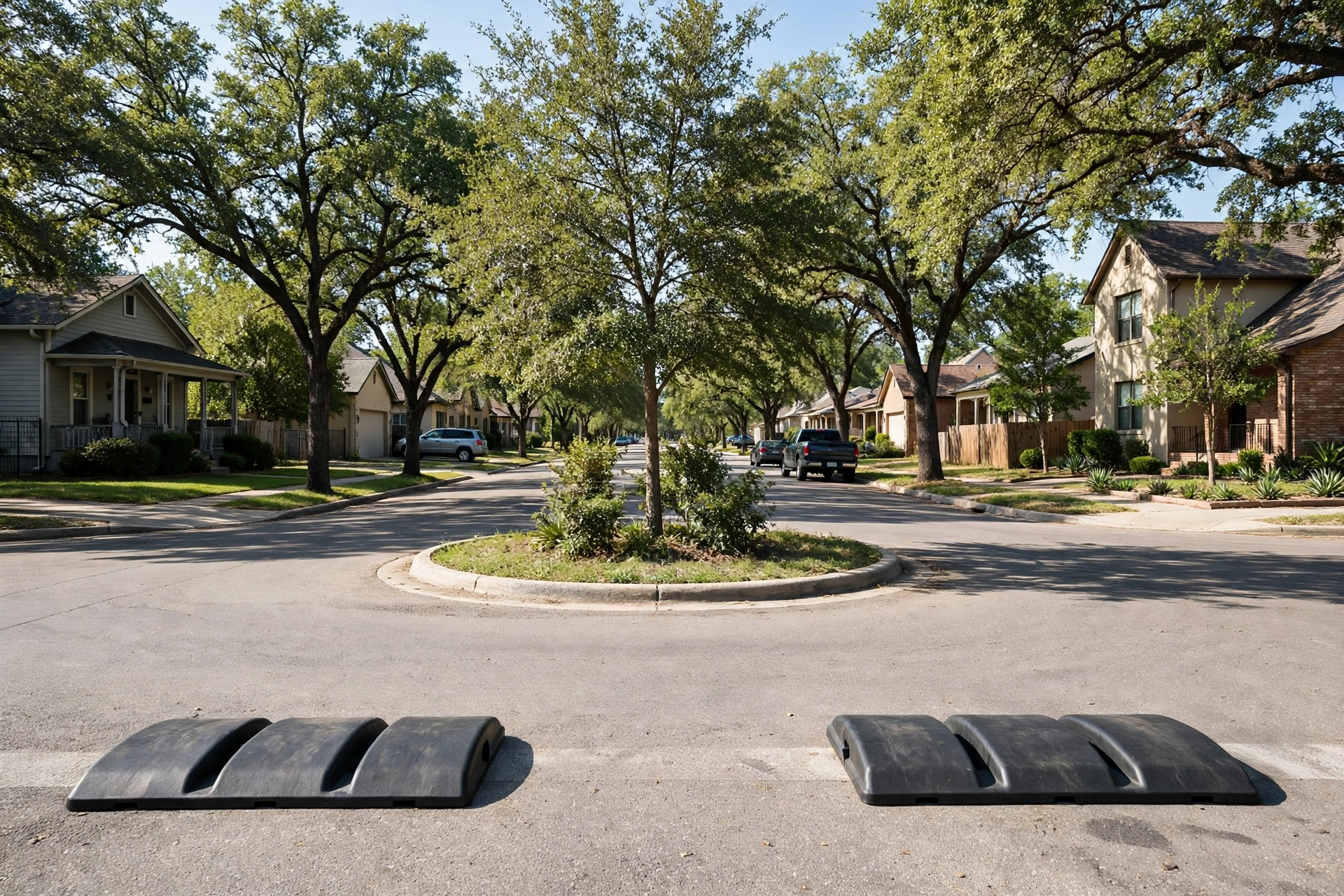
AUSTIN — Slower streets are showing up in the crash numbers. The city's Speed Management in Austin report, published Monday, October 26, found that traffic calming features and lower speed limits correlate with a 17 percent reduction in severe crashes citywide and a 14 percent drop in high-end speeding, according to the report as summarized in Monday's coverage.
The tools are physical as much as legal. The city has installed mini-roundabouts and speed cushions in neighborhoods while the City Council authorized lower speed limits across 73 arterial roadway segments, following earlier council actions in 2020 and 2022 to lower arterial limits. At locations that received calming, high-speed traffic fell 78 percent, the report found, and the 25-mph default speed limit on residential streets was associated with a 39 percent decrease in crashes involving death or serious injury.
The baseline shows why the city acted. Austin recorded 79 traffic deaths and 9,123 total crashes in 2025. So far in 2026, the city had recorded 8,085 total crashes as of October 23, with both traffic fatalities and total crashes down in the first ten months of 2026 compared with the same period in 2025, according to the report.
For drivers, the report's practical meaning is more of the same street design ahead: more speed cushions and roundabouts in residential areas, built to enforce slower speeds by design rather than by enforcement alone. The city presents the program as proactive street engineering - constraining vehicle speeds to reduce the frequency and severity of crashes - and residents should expect the calming features, and the slower neighborhood commutes that come with them, to keep spreading.