Patrick Stewart Dead at 86: The Shakespearean Who Became Captain Picard, and the Private Illness His Family Revealed Only at the End
Sir Patrick Stewart died Wednesday at his home in Los Angeles. The family statement that announced his death also disclosed, for the first time, that he had lived with Alzheimer's disease and Lewy body dementia — and asked that remembrances go to the research that fights both.
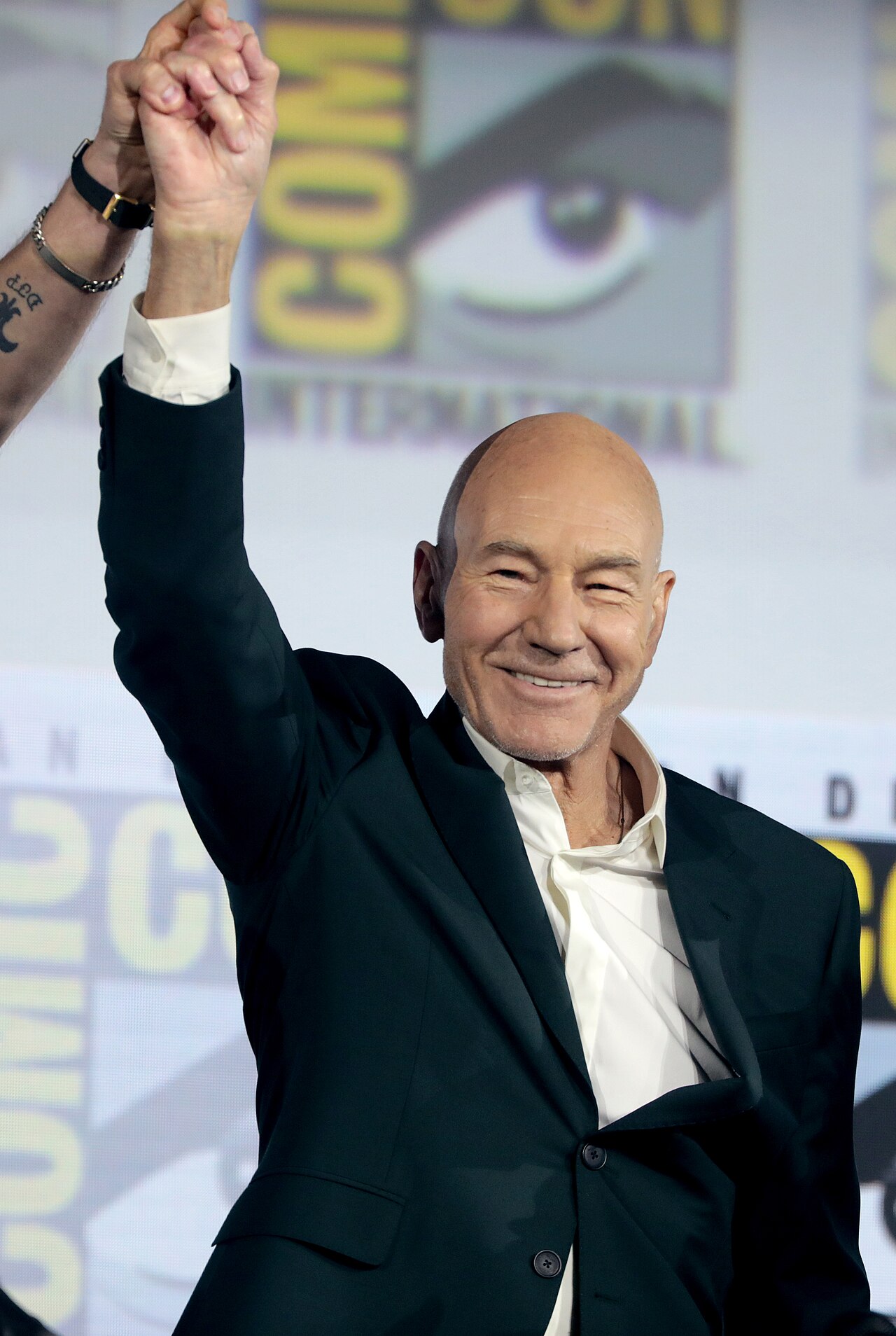
Sir Patrick Stewart, the Yorkshire textile worker's son who became a knight of the British stage and then, improbably and completely, Captain Jean-Luc Picard, died Wednesday at his home in Los Angeles. He was 86. The announcement came Thursday in a family statement posted to his social media and relayed by spokesperson Kelly Bush Novak, and it carried a revelation his public had never heard: Stewart died, the statement said, “in the loving care of his beloved wife Sunny” following “a brief and poignant journey with Alzheimer's Disease and Lewy Body Dementia.” Neither diagnosis had been publicly disclosed during his life. The disclosure is now part of his story — a private illness, borne quietly to the end by one of the most public voices in acting.
The distance he traveled is the first fact of the legacy. Stewart was born July 13, 1940, in Mirfield, Yorkshire, England, to a mother who worked as a textile worker and a father who was a soldier. He rose from poverty to a Shakespearean stage career with the Royal Shakespeare Company, building a reputation as one of the most respected classical actors of his generation long before most of the world knew his face. In 2010, Queen Elizabeth II knighted him for services to drama — Sir Patrick Stewart, the mill town's son, honored at the summit of the profession he had climbed from its floor.
Then came the captain's chair. As Captain Jean-Luc Picard in “Star Trek: The Next Generation” from 1987 to 1994, Stewart set the bearing, diction and moral gravity of a Shakespearean leading man on the bridge of a starship, and a generation of viewers took lessons in restraint, diplomacy and command from an actor who had spent decades playing kings. He returned to the role decades later in “Star Trek: Picard” from 2020 to 2023 — older, wearier, still unmistakably the captain. Alongside it he became Professor Charles Xavier in the “X-Men” films, the calm center of another enormous franchise. Two such roles could have been a cage for a lesser actor. For Stewart they became proof of range: the same trained voice that carried verse on the classical stage could hold a screen universe together without ever raising it.
His final bow is still ahead of audiences. Stewart's last screen role is a return as Xavier in “Avengers: Doomsday,” which reaches theaters December 18, 2026 — meaning the farewell performance of his career will now be watched as one. He is survived by his wife, the singer Sunny Ozell, whom he married in 2013, and by his two children, Daniel and Sophie. Tributes were posted through Thursday by Hugh Jackman, William Shatner and Famke Janssen, fellow travelers from the franchises that defined his fame.
The family's last request of his public turns the private disclosure into a public purpose. In lieu of flowers, the family asked for donations to the Johns Hopkins Alzheimer's Disease Research Center Fund and the Alzheimer's Foundation of America. It is a fitting closing note for the shape of this life: a man who kept his illness out of the spotlight used the announcement of his death to point his audience — the Shakespeare devotees, the Trekkers, the moviegoers — toward the diseases that ended his journey, and toward the people working to end them.